
Cambridge House, Mayfair – an Historic Central London Landmark
Heritage and Context
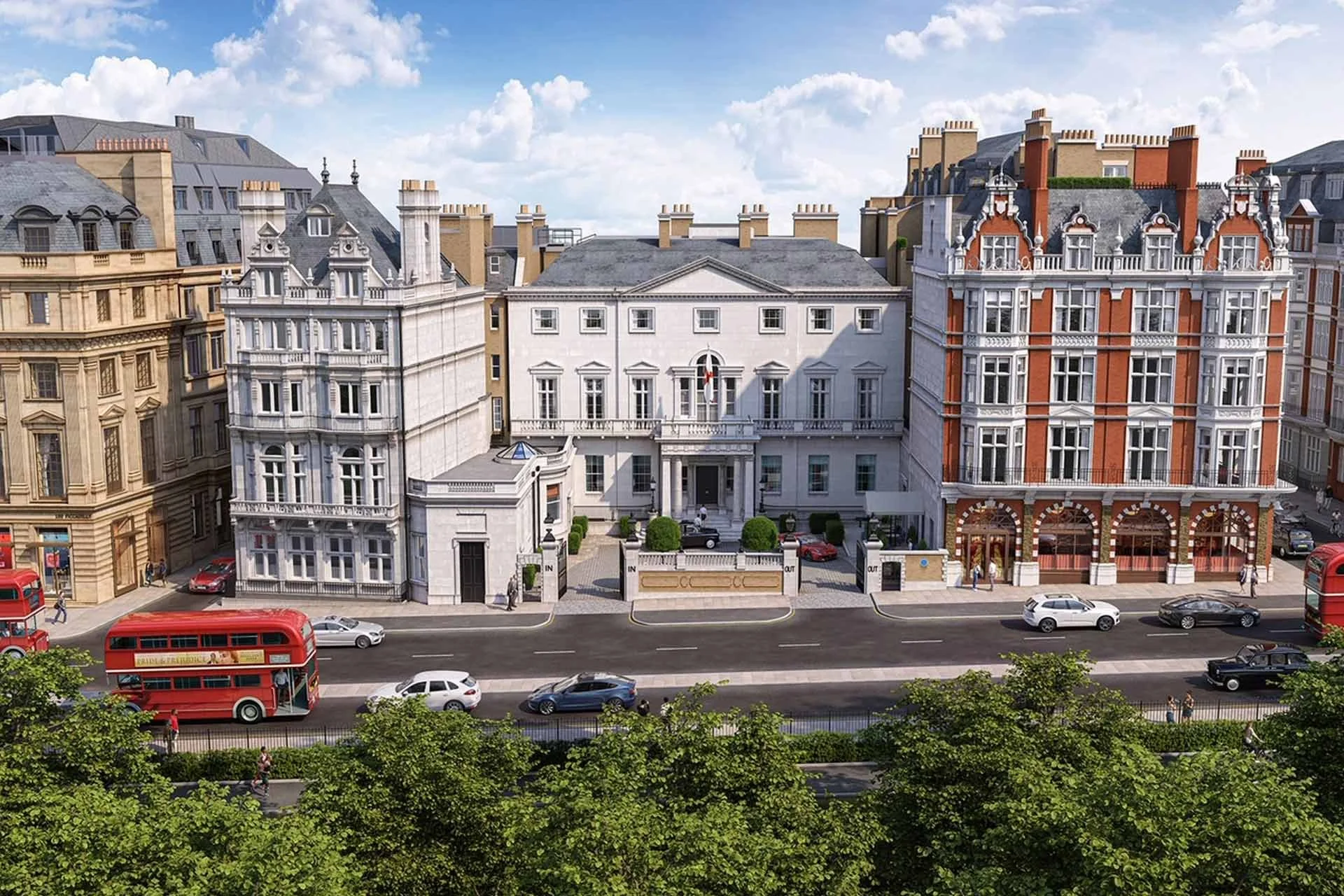
Originally constructed in the mid-18th century, Cambridge House is a Grade I listed building with a long and varied history. Formerly known as Egremont House, it has served as a private residence, a gentlemen’s club and later as part of the Naval and Military Club, becoming a recognised fixture on Piccadilly within Mayfair’s historic fabric. Its architectural significance, combined with its prominent location, makes it one of the more notable heritage buildings currently undergoing transformation in central London.McCue’s role within this scheme centres on the delivery of detailed fit-out works across key front-of-house spaces. The scope spans strip-out and enabling works, followed by the integration of MEP services, partitions, bespoke joinery and high-quality finishes throughout. Each element requires a high level of coordination to ensure that new interventions sit comfortably within the existing fabric of the building.
Fit-Out Scope and Delivery
Works are now progressing on site, with McCue delivering fit-out across key front-of-house areas within the building. Key areas include:
Ballroom
Orangery
Reception and lobby areas
Lounges and bar spaces
Circulation areas
From a delivery perspective, the programme is structured around phased works, allowing multiple areas to progress in parallel while maintaining control over sequencing and access. Early stages have focused on mobilisation, surveys and the coordination of design, procurement and manufacturing activities, establishing a clear foundation for the main fit-out phases . As works progress, the emphasis remains on maintaining flow across a number of interdependent spaces, including reception, lounges, circulation areas and larger feature spaces such as the ballroom and orangery .
McCue Bespoke Joinery Elements
Extensive bespoke joinery across key front-of-house areas, including the ballroom and orangery
Large-scale wall panelling and architectural timber elements forming a core part of the finishes package
Bar fronts, back bars and integrated joinery installations within lounge and hospitality spaces
Specialist joinery within cigar and humidor areas, requiring precision manufacture and controlled detailing
Close coordination with MEP and other trades to ensure seamless integration within the existing building fabric
Approach
Working in Mayfair brings its own constraints. Access, logistics and material movement require careful planning, particularly within a dense, high-value urban environment. These challenges are compounded by the nature of the building itself, where heritage constraints limit the extent of intervention and demand a considered approach to both sequencing and installation.
The integration of modern building services within an existing structure is another key consideration. MEP coordination is critical, particularly where routes and plant must be introduced without impacting existing features. This requires close collaboration between trades and a strong emphasis on early coordination to avoid disruption as works progress.
Project Team
The project is being delivered alongside a wider team that includes Ardmore, AKT II as structural engineer, Horea Lea MEP design, Studio PDP Architects and Core Five providing cost consultancy. Close coordination across this team is central to maintaining programme and ensuring that design intent is carried through into delivery on site.
At Cambridge House, the focus remains on delivering a controlled, detail-led fit-out within a complex and historically sensitive setting. Progress is being driven through careful planning and consistent coordination, ensuring that each phase builds towards a cohesive and high-quality end result.